


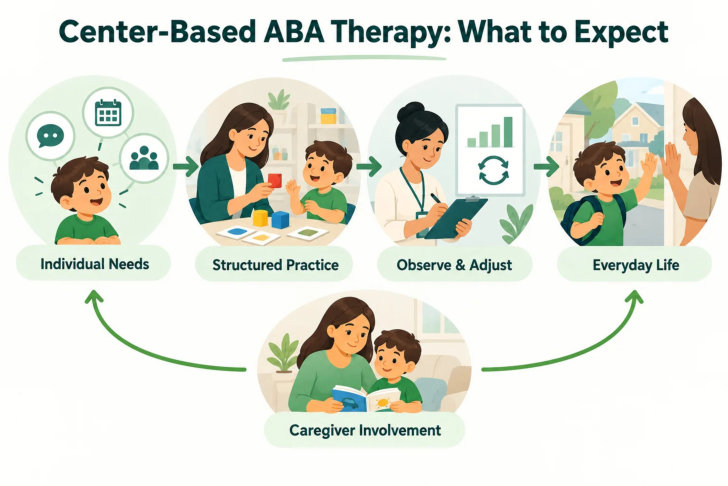
Knowing what your child may experience during Applied Behavior Analysis (ABA) therapy can make the process easier to understand. In a center-based setting, your child receives individualized support in an organized environment where learning opportunities can be planned around current abilities, everyday needs, and meaningful goals.
ABA therapy can include opportunities to practice communication, daily routines, and interactions with others. Rather than expecting every child to learn in the same way, the support provided can be adjusted based on your child’s needs and how they respond during different activities.
That connection between structured practice and everyday life is an important part of individualized care. At Next Level ABA LLC, we understand that each child brings different strengths, needs, and ways of learning. Our approach focuses on providing individualized support for children and adolescents in Humble, Texas, while also serving families throughout the Houston area.
If you are beginning to explore support for your child, you can learn more about our ABA therapy services as you consider which questions matter most for your family. Learning about the available options can help you better understand how therapy may fit into your child’s current needs and routines. It can also give you a clearer starting point for conversations with the care team.
What Might Your Child Experience at an ABA Center?
Your child’s time at an ABA center can be shaped around individual goals rather than following one identical routine for everyone. A structured environment gives the care team opportunities to work on developing skills while observing how your child responds to activities, directions, and interactions.
With center-based ABA therapy, learning opportunities can be organized around your child’s identified needs and current abilities. Some activities may focus on communication, participating in familiar routines, or interacting with others. The exact focus depends on the goals identified for your child.
Structure does not mean every moment needs to feel formal. Activities can still involve everyday situations and meaningful interactions. What matters is that there is a clear reason behind what your child is practicing and that the support can be adjusted as needed.
How Are Your Child’s ABA Therapy Goals Chosen?
ABA therapy goals should begin with understanding your child’s individual needs. Before deciding what to work on, the care team needs information about areas that may affect learning, communication, routines, or participation in everyday activities.
This process gives the team a clearer picture of where support may be useful instead of relying on the same priorities for every child.
For example, one child may need support with communicating needs, following familiar directions, or participating in daily routines. Another child may have different priorities based on current abilities and family concerns. Individualized planning keeps the focus on skills that are relevant to your child’s everyday experiences.
Why Does Repeated Practice Matter?
Practicing a developing skill more than once gives your child additional opportunities to use it with support. It also allows the care team to notice what is working, where more guidance may be useful, and when an activity may need to be adjusted.
This can be especially helpful when a skill is still new. A child learning to request help, for example, may benefit from practicing that skill during different activities rather than only in one situation. The same idea can apply to following directions or participating in a familiar routine.
The purpose is to make practice meaningful. Skills such as communication, interaction, and everyday routines can affect many parts of a child’s day, so therapy can focus on practical opportunities to work on them.
How Can ABA Therapy Connect With Everyday Life?
Skills practiced during therapy can relate to situations your child experiences at home, in the community, or as part of other daily routines. The connection is important because communication and independence are used in many different settings.
A child might practice asking for something they need, completing part of a routine, or responding during an interaction with another person. These are broad examples, and the specific goals should depend on what is appropriate for your child.
At Next Level ABA LLC, we consider how developing skills may relate to your child’s everyday experiences rather than treating each activity as an isolated exercise. This helps keep therapy focused on practical goals that have meaning beyond the immediate activity.
What Role Do You Have as a Parent or Caregiver?
Your involvement can help create a stronger connection between therapy and familiar routines outside the center. You know many of the situations your child encounters each day, so your questions and observations can provide useful context for the care team.
Through parent and caregiver training, you can learn practical ways to support developing skills during routines and interactions that are already part of your day. This may also help you better understand why certain strategies are being used and when they may be appropriate.
Caregiver involvement does not mean turning every moment at home into a therapy session. It can be as practical as recognizing opportunities to encourage communication, reinforce a familiar routine, or respond consistently to a skill your child is learning.
What Should You Ask Before Your Child Begins?
Asking a few clear questions can help you understand what to expect and whether the approach makes sense for your family.
- How will my child’s goals be chosen?
Ask how the team learns about your child’s current abilities and how family priorities are considered during planning.
- How will I be involved and kept informed?
Understanding how the team communicates with you can help you know when to ask questions and how caregiver participation fits into therapy.
- How will support change as my child’s needs change?
Individualized care should allow goals and strategies to be reviewed as the team gathers more information about your child’s progress and current needs.
You may also want to ask practical questions about intake, scheduling, and what happens before services begin. Having those details can make the next steps easier to understand.
Understanding What Comes Next
Learning about center-based ABA therapy is often just the beginning of the conversation. What matters most is understanding how a provider approaches your child’s individual needs, how goals are selected, and how you can stay involved along the way.
A structured setting can provide regular opportunities to work on meaningful skills while giving the care team a chance to observe and adjust support. For you as a parent or caregiver, understanding that process can make it easier to ask informed questions and know what to look for as you explore available options.
If you are considering center-based ABA therapy and would like to understand what the next step could look like for your child, you can contact us to ask questions and learn more about getting started.


Leave a Reply