


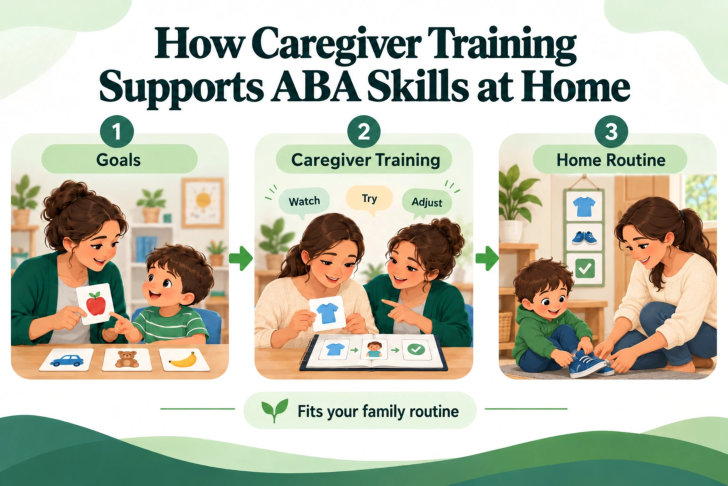
When your child is learning new skills through Applied Behavior Analysis (ABA) therapy, many of the same situations can come up again at home. You may see them when your child asks for help, follows part of a routine, or responds during an everyday interaction. Caregiver training helps you understand how to support those developing skills when these moments happen outside therapy.
It can also give you more clarity about what your child is working on and how you can respond in ways that are consistent with those goals. Instead of trying to guess what may be helpful, you can learn practical strategies that make sense for your child and the routines your family already has.
That kind of support is most useful when it feels realistic enough to use in everyday life. At Next Level ABA LLC, we understand that caregiver guidance should be clear, practical, and connected to your child’s individualized ABA goals.
If you would like to see how this support fits into your child’s care, you can learn more about our parent and caregiver training available to families in Humble and the Houston area. Training can help you better understand how therapy goals relate to situations at home and in the community, while giving you a place to discuss what may be most useful for your child.
Why Can Caregiver Involvement Be Helpful?
You are already present for many moments when your child communicates, follows routines, and interacts with others. Understanding how those moments relate to therapy can help you recognize natural opportunities to support a developing skill.
For example, you may learn why a certain response is encouraged when your child asks for something or how to support part of a familiar routine. You may also gain a clearer sense of when your child needs more help and when there may be room to encourage greater participation.
This does not mean you are expected to become your child’s therapist. Your role is different. Caregiver training can help you better understand the approaches being used so you can make informed choices when similar situations arise in everyday life.
Bringing ABA Skills Into Everyday Routines
Home routines offer familiar places to practice skills because your child already experiences them regularly. A morning routine may provide an opportunity to follow a familiar direction. Mealtime can include communication, while getting ready to leave home may involve completing a few steps with support.
These moments do not need to become formal therapy sessions. They can simply give your child additional opportunities to use developing skills in situations that already have meaning.
The same approach can extend beyond home. Visits with relatives, errands, and other community activities may bring different expectations, but they can still give you useful context for understanding how your child responds in different situations.
If another parent or caregiver involved in your child’s care would benefit from understanding center-based ABA therapy, you can help them see how structured support, individualized goals, and caregiver involvement can work together. We can also help explain how those parts may relate to your child’s current needs and routines.
Consistency Does Not Mean Every Routine Must Look the Same
Consistency can give your child clearer expectations, but every situation does not need to be handled in exactly the same way. What works during a quiet routine at home may need to be adjusted when you are in a busy community setting or dealing with an unexpected change.
Caregiver training can help you understand the general purpose behind a strategy. That understanding gives you more context for deciding how it may fit a particular situation while keeping your child’s current abilities and goals in mind.
At Next Level ABA LLC, we consider how caregiver guidance can connect with individualized therapy goals while still respecting the routines and situations you encounter outside the center. The aim is to make the information useful in real life, where circumstances can change from one day to the next.
Supporting Everyday Independence
Daily routines can also provide opportunities for your child to take a more active role in familiar activities. Depending on your child’s goals, that might mean following a direction, completing part of a self-care routine, or participating more independently in an everyday task.
Small opportunities like these can help make practice feel relevant because the skill has a clear purpose within the activity. The amount of support your child needs may vary, so the focus should remain on what is appropriate for their current abilities.
When these areas are part of your child’s goals,
Making Strategies Fit Your Family’s Routine
Useful caregiver support should fit into the life you already share with your child. You should be able to discuss situations that actually happen during your day and understand how a strategy might apply without feeling that every routine must revolve around therapy.
Your questions and observations matter here. What you notice at home can provide helpful context about when a skill comes easily, when your child may need more support, and which situations are especially important to your household.
Over time, that shared understanding can create a clearer connection between what your child practices during therapy and the experiences that make up everyday life.
If you would like practical support for connecting your child’s ABA goals with everyday routines, you can get in touch with us to talk about how caregiver training may fit your family’s needs.

Leave a Reply